
Licensed · Insured · Local
Water Well Drilling & Installation in the Eastern Texas Panhandle
A good well is the difference between land you can use and land you can only look at. Applewhite Water Well drills, cases, and equips new water wells for ranches, farms, and rural homes across Wheeler County and the surrounding Panhandle counties.
Matthew Applewhite runs every drilling job himself under Texas license #61162. You talk to the same person who sites your well, sets the casing, and hands you the keys. No call centers and no subcontractors.
Did you search for a water well drilling company near you and find a dozen outfits from Amarillo? We live here. We know the formations under this end of the Panhandle because we have drilled through them for years.
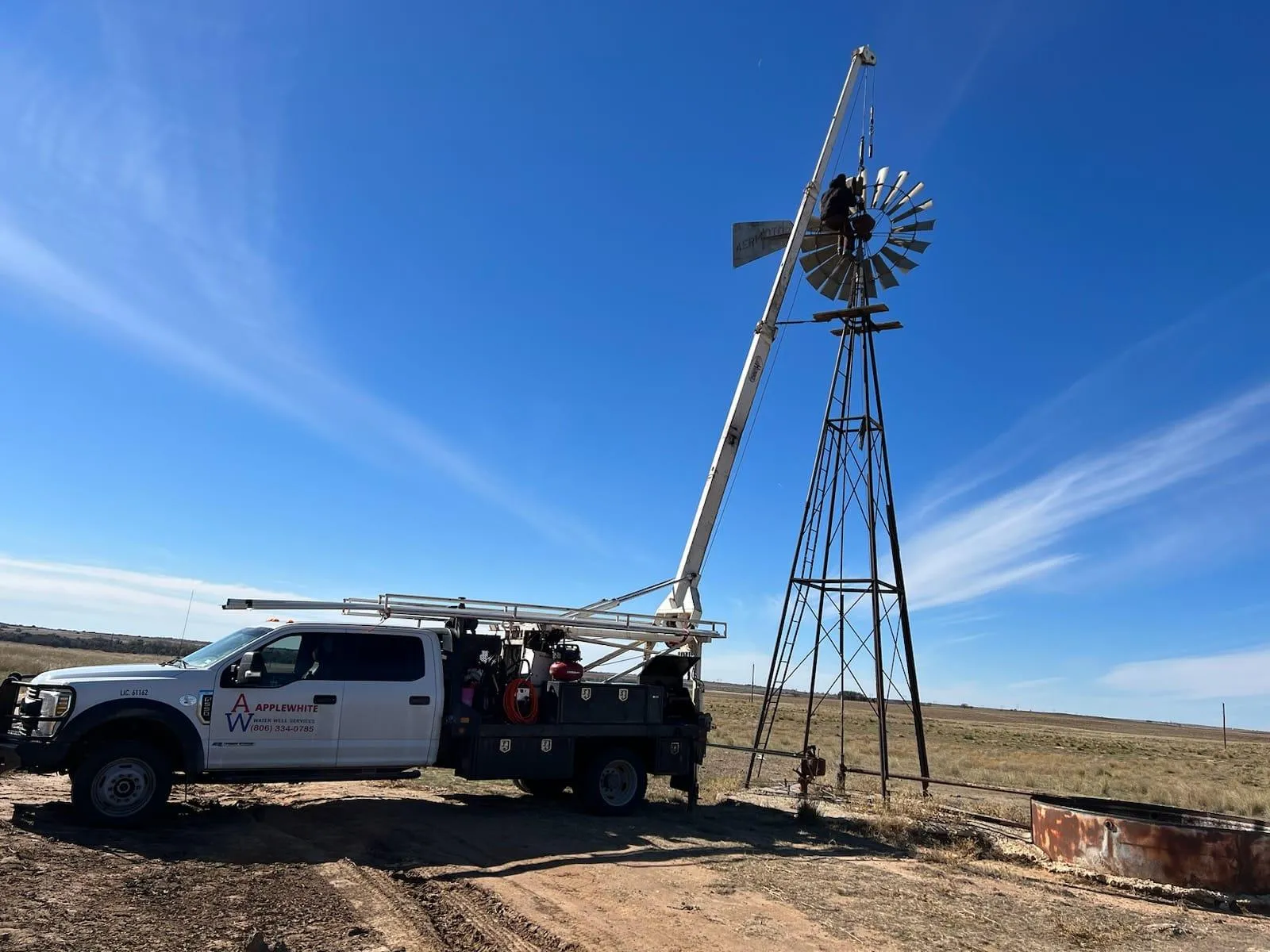
What You Get With Applewhite
Licensed and insured
Drilled and completed to State of Texas well construction standards, with the paperwork filed for you.
Ranch and residential
Livestock wells, irrigation wells, and household wells. We size the bore, casing, and pump to the job.
Complete turn-key installs
Drilling, casing, pump, pressure system, electrical or solar power, and the well house if you want one.
Straight answers on siting
We tell you what depth and yield to expect before the rig moves in, based on nearby well logs and local experience.
How the Job Goes
-
Site visit and estimate
We walk the property with you, look at power access and terrain, pull nearby well records, and give you a written estimate. The visit is free.
-
Siting and setback checks
Texas rules require minimum distances from septic fields, pens, and property lines. We locate the well so it passes and so it produces.
-
Drilling and casing
The rig drills to target depth, then we set steel or PVC casing and gravel pack the annulus so the well pulls water, not sand.
-
Sealing and completion
A cement or bentonite surface seal keeps runoff and contamination out of your water. This step is required by state rules, and we never skip it.
-
Pump and equipment
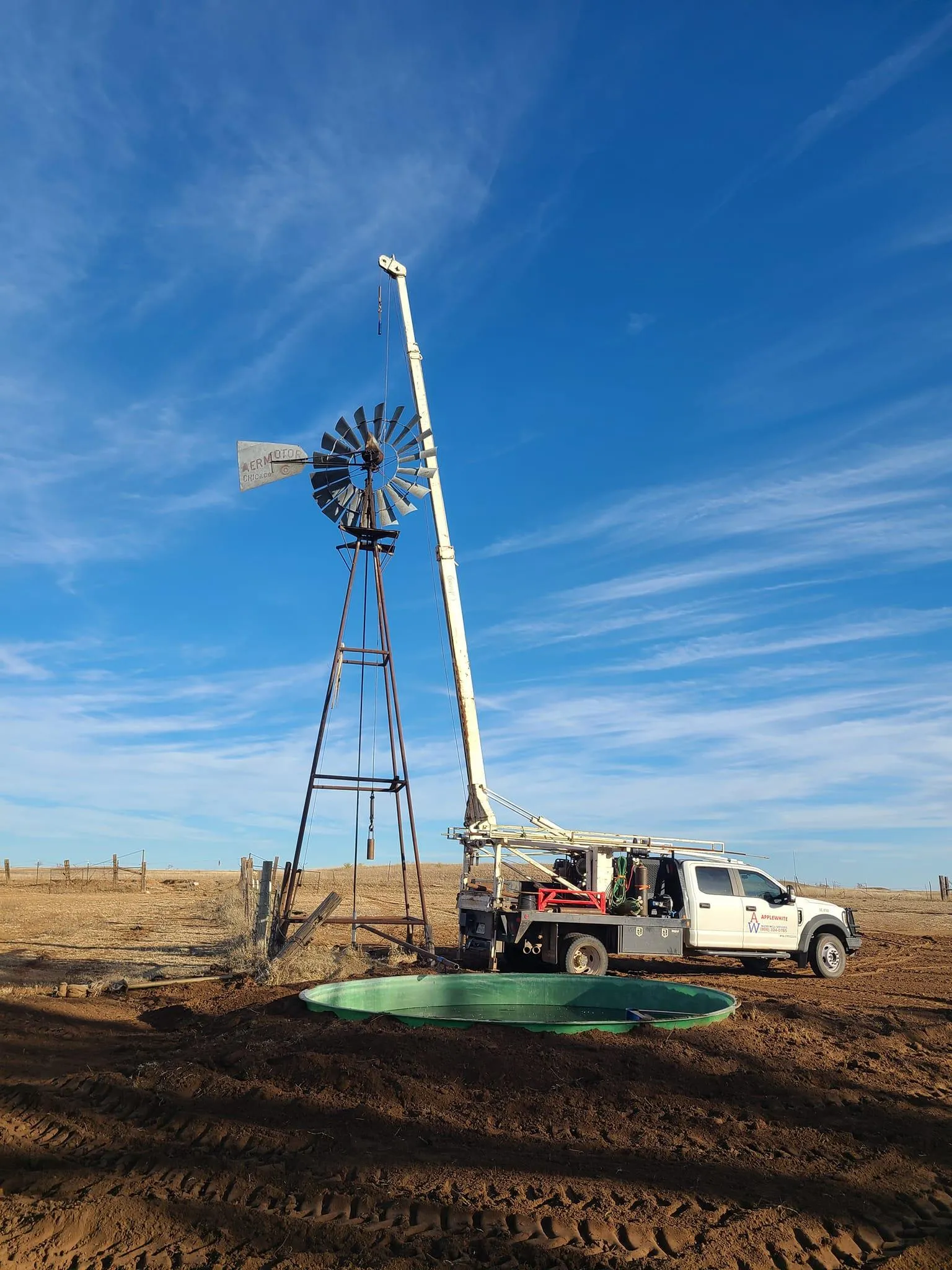
We install the submersible pump, windmill, or solar system, plumb the storage or pressure tank, and test flow before we leave.
What a new well costs in the eastern Panhandle
Every honest driller answers cost the same way: it depends on depth, casing size, and equipment. Depth drives the price more than anything else. A stock well that hits water at 150 feet is a different job than an irrigation well cased to 400 feet.
Beyond the hole itself, the pump system is the second variable. A basic submersible with a pressure tank costs less than a solar setup with storage, and a windmill tower is its own line item. We break all of it out in the written estimate so you can compare options.
We do not publish flat prices because no two wells are the same, and a made-up number would only mislead you. What we will do is give you a firm written estimate after a free site visit, and stand behind it. Call 806-334-0785 and we will get you on the schedule.
How deep do wells run around Wheeler County?
Most of our service area sits over the Ogallala Aquifer, the big water table that runs under the High Plains. On the eastern edge of the Panhandle the saturated thickness is thinner than it is west of Amarillo, so proper siting matters more here, not less.
Along creek bottoms like Sweetwater Creek and the Washita, shallower alluvial sands can produce good stock water. Upland sites usually drill deeper to reach reliable saturation. When we bid your well, we check logs from nearby registered wells to estimate depth honestly.
You can read more about the aquifer itself at the Texas Water Development Board, which maintains data on the Ogallala across the state.
New well or rework the old one?
Not every dry well needs a new hole. Sometimes the water table has dropped below the pump setting and the fix is lowering the pump. Sometimes the casing has collapsed or filled with sand and cleaning it out restores flow.
We inspect the old well first when it makes sense. If a rework will buy you years of service for a fraction of the cost, we tell you. If the well is done, we tell you that too, and site the new one where it should have been in the first place.
Wells for cattle, irrigation, and large acreage
Livestock operations need water where the cattle are, not where the house is. We drill remote pasture wells and pair them with windmills or solar pumps so you get dependable water with no power bill and no long trenching runs.
For irrigation and high-demand use, we size the bore and pump for the gallons per minute you actually need. Oversizing wastes money on day one. Undersizing wastes it every day after.
When to drill in the Panhandle
We drill year-round. Summer heat is hard on crews but fine for rigs. The real scheduling pressure comes in spring and early summer, when stock tanks dry down and everyone calls at once.
If you know you will need a well for summer grazing, call in winter or early spring. Lead times are shorter, and your well is producing before the heat arrives.
Who shows up
Matthew Applewhite, Owner & Operator
When you call Applewhite Water Well, you get Matthew. He answers the phone, walks your property, quotes the job, and does the work. He holds an active Texas Water Well Driller and Pump Installer license (#61162) with the Master Water Well Pump Installer designation, verified with TDLR. Insured, and based in Wheeler.
- Same person from first call to finished well
- decades of hands-on well work in the eastern Texas Panhandle
- Serving ranches and rural homes across 12 Panhandle communities
- Written estimates before work begins, every time
Manufacturer & Industry Resources
- Texas Water Development Board — Ogallala Aquifer — State data on the aquifer most of our wells draw from.
- TDLR Water Well Driller Program — The state program that licenses Texas well drillers and pump installers.
- Wellowner.org (National Ground Water Association) — Independent guidance for private well owners.
Well Drilling Questions, Answered
How long does it take to drill a water well?
Most residential and stock wells take one to three days of drilling, plus completion and pump work. Weather and depth can stretch that. We give you a realistic timeline with the estimate.
Do I need a permit to drill a well in Texas?
Texas requires wells to be drilled by a licensed driller who files a State Well Report, and construction must meet state standards. Some areas also fall under groundwater district rules. We handle the paperwork that applies to your site.
How much does a new water well cost?
It depends on depth, casing, and the pump system you choose. We give firm written estimates after a free site visit instead of quoting a number blind. Call 806-334-0785 to set one up.
How do you know where to drill?
We use nearby registered well logs, the terrain, and years of local drilling experience. On the eastern edge of the Ogallala, picking the right spot on the property makes a real difference in depth and yield.
What size well do I need for cattle?
A typical cow drinks 10 to 20 gallons a day in summer. We size the well, pump, and storage from your head count so the system keeps up in July, not just in October.
Can you drill where there is no electricity?
Yes. Remote pasture wells are our specialty. We pair them with solar pumps or windmills, so the well needs no grid power at all.
Will my new well water be safe to drink?
We complete wells with the sanitary seals state rules require, and we recommend a water test after completion for any household well. Testing is cheap insurance.
Do you warranty your drilling work?
Yes. Workmanship and materials are covered, and pump equipment carries the manufacturer warranty. We put the terms in writing with your estimate.
Well Drilling Across the Eastern Texas Panhandle
We serve every community below from our shop in Wheeler. Pick your town for local details, or call and tell us where the gate is.
- Well Drilling in Wheeler, TX
- Well Drilling in Pampa, TX
- Well Drilling in Shamrock, TX
- Well Drilling in Canadian, TX
- Well Drilling in Wellington, TX
- Well Drilling in Groom, TX
- Well Drilling in Miami, TX
- Well Drilling in Kelton, TX
- Well Drilling in Skellytown, TX
- Well Drilling in Alanreed, TX
- Well Drilling in Briscoe, TX
- Well Drilling in Allison, TX