
Licensed · Insured · Local
Solar Well Conversions & Installation
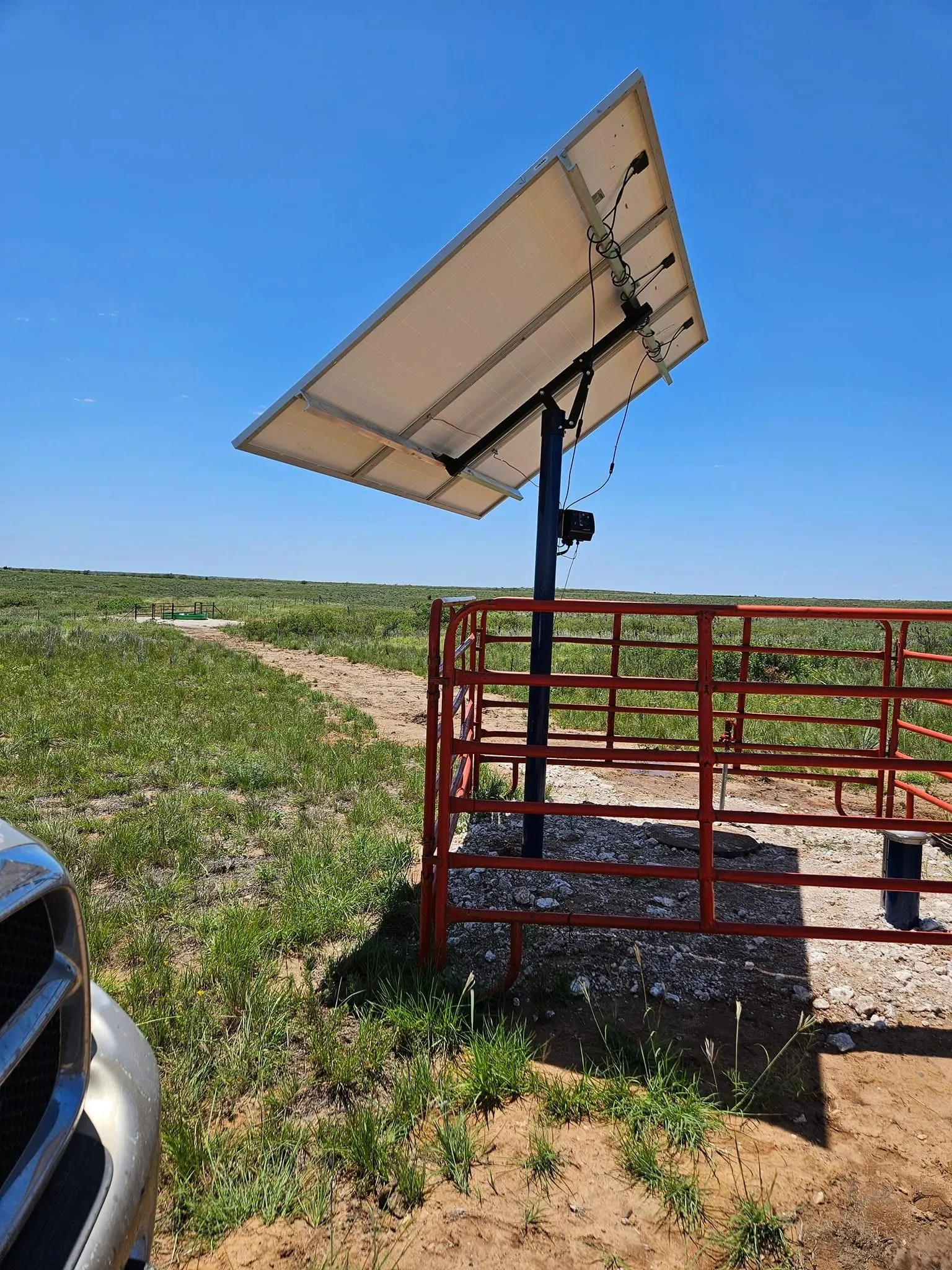
Solar conversion is the work we do most, and the work we believe in most. The Panhandle gets sun nearly year-round, and a solar well pump turns that sun straight into water: no meter, no power bill, no mile of trench to the nearest pole.
Applewhite Water Well converts existing windmill and electric wells to solar and installs complete new solar pumping systems: panels, controller, submersible pump, and the storage that carries you through cloudy days. Most conversions reuse your existing well and often the drop pipe, which keeps the cost a fraction of new drilling.
Every system is sized from your well’s depth and your herd’s demand, not from a catalog page.
What You Get With Applewhite
True off-grid water
The system pumps whenever the sun shines and banks water in storage for when it does not.
Sized to the well
Panel wattage, pump model, and storage volume are matched to your depth, yield, and head count.
Low moving-part count
No belts, no engines, no fuel runs. Panels and a submersible pump, and very little to break.
Retrofit friendly
We convert existing electric and windmill wells to solar where it fits, reusing the well and often the drop pipe.
How the Job Goes
-
Demand math
Head count, garden, or household use gets turned into gallons per day. That number drives the whole design.
-
System design
We spec the pump for your depth, the array for your gallons, and storage for at least a couple of low-sun days.
-
Installation
Panel mount set in concrete, wiring in conduit, pump set, and float or pressure controls installed. Most installs finish in one to two days.
-
Walkthrough
We show you the controller, the disconnects, and the simple checks worth doing when you drive past.
What a solar well system includes
Four parts: the array, the controller, the pump, and storage. Panels make DC power. The controller conditions it and protects the pump. The submersible pump moves water while the sun is up. The storage tank turns an intermittent pump into constant water.
Storage is the part people undersize. Two to three days of demand in the tank means a stretch of cloudy weather is a non-event instead of an emergency haul with the water trailer.
What solar pumping costs, honestly
A pasture livestock system costs less than most people expect, and far less than running grid power any real distance. Deep wells and high daily volumes push the price up because they need bigger pumps and more panel.
Compare the quote against the true alternatives: a mile of new power line, a generator you have to fuel forever, or hauling water every day of a dry summer. On remote sites solar usually wins the ten-year math without breaking a sweat. Free written estimates: call 806-334-0785.
The sizing math, in plain terms
Every solar design starts with two numbers: daily gallons and total lift. Gallons come from the demand side: a cow-calf pair drinks 10 to 20 gallons a day in summer, a household uses 50 to 100 per person, and a garden takes what it takes. Lift is the vertical distance from the water level in the well up to the tank, plus friction in the pipe.
Those two numbers pick the pump. The pump picks the panel wattage, with margin for winter sun angles and dirty-panel days. Then storage gets sized at two to three days of demand. Skip any step in that chain and you get a system that works in the brochure but not in February.
We run this math on paper for every quote and hand you the numbers with the price, so you can see exactly what the system is designed to do.
Panhandle-proofing: hail, wind, and lightning
Yes, we get hail out here. We install panels rated for impact, on steel mounts engineered for Panhandle wind, with the electrical protection that gives lightning somewhere to go besides your controller. Storms are a design input here, not a surprise.
When a big storm does take a panel, panels are modular and replaceable. The well, pipe, and pump underneath are untouched.
Solar matches the cattle calendar
The system produces the most water in the exact months your cattle drink the most. Long summer days mean maximum pumping through July and August. Winter demand is a fraction of summer, and the storage tank bridges short days easily. It is the rare machine whose output curve matches the demand curve on its own.
Who shows up
Matthew Applewhite, Owner & Operator
Applewhite Water Well is Matthew Applewhite's shop: a local crew that walks your property, quotes the job, and does the work. Licensed under an active Texas Master Water Well Pump Installer license (#61162, TDLR verified), insured, and based in Wheeler.
- One local crew from first call to finished job
- decades of hands-on well work in the eastern Texas Panhandle
- Serving ranches and rural homes across 12 Panhandle communities
- Written estimates before work begins, every time
Manufacturer & Industry Resources
- Grundfos USA — Maker of the SQFlex solar submersible line we frequently install.
- Franklin Electric — Solar and standard submersible pump systems.
Solar Conversions Questions, Answered
Does a solar pump work on cloudy days?
It pumps at reduced rate under clouds and stops in the dark. That is what the storage tank is for. We size storage so normal Panhandle weather never leaves a trough dry.
How deep can a solar pump lift water?
Modern solar submersibles handle several hundred feet of lift. Deep settings need more panel wattage. We design from your actual water level, not the brochure.
What happens in a hailstorm?
We install impact-rated panels on engineered steel mounts. Damaged panels, if it comes to that, swap out without touching the well or pump.
Do solar systems need batteries?
For livestock water, usually not. Pumping to storage while the sun shines is simpler and cheaper than batteries. We use batteries only when a design truly calls for them.
Can you convert my windmill well to solar?
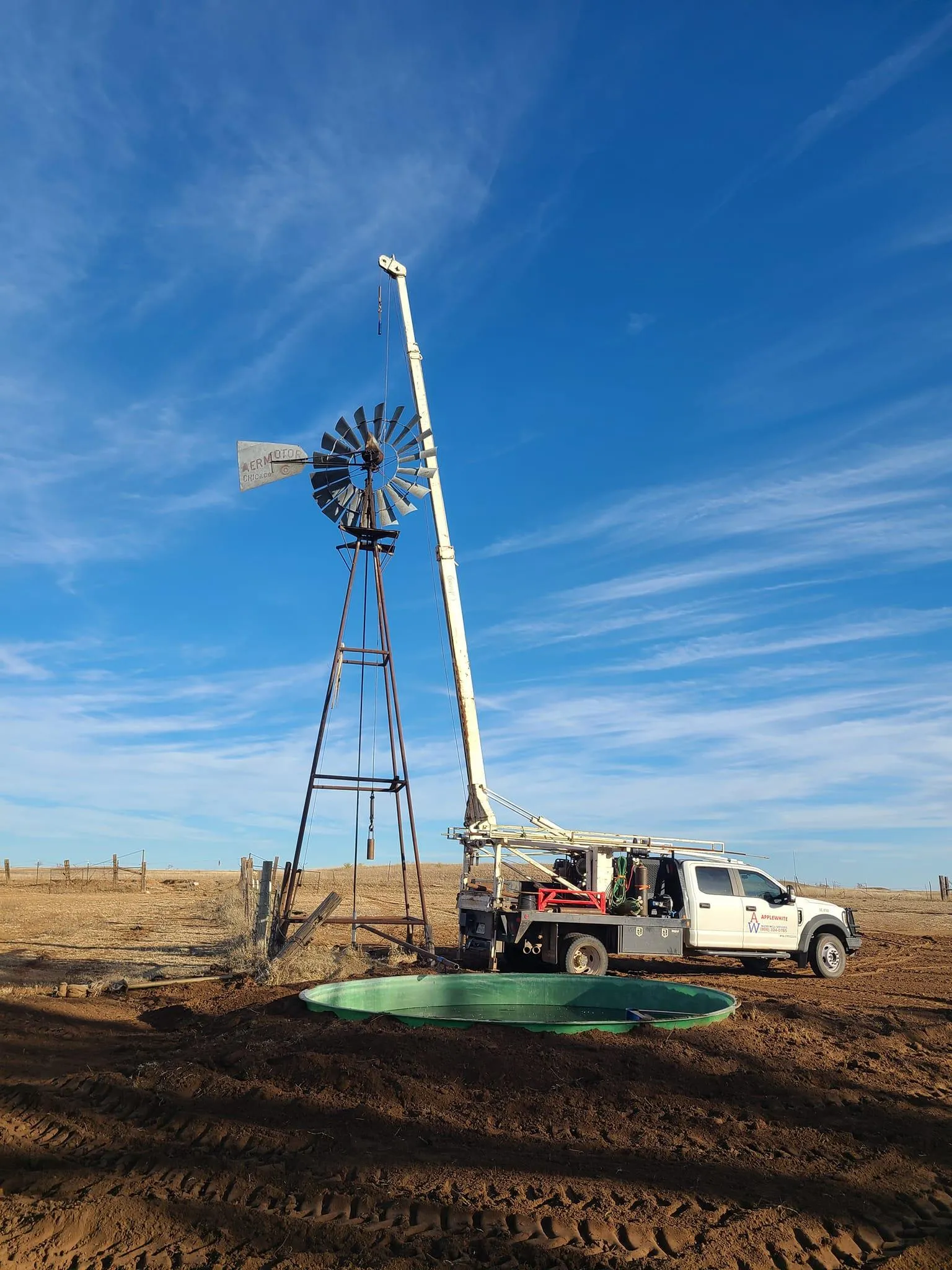
Yes, and the well itself usually needs no changes. Some owners keep the tower standing and let the mill be the backup.
How much maintenance does solar need?
Very little. Keep the panels reasonably clean, glance at the controller lights, and let us check the pump when we are out for other work. There is no engine and no oil.
How long do solar well systems last?
Panels are commonly warrantied for 25 years of output. Pumps and controllers are the service items, similar in life to any submersible system.
Is there a system big enough for my house?
Household systems are practical, especially paired with good storage. We will look at your usage and tell you what the system takes before you commit.
Solar Conversions Across the Eastern Texas Panhandle
We serve every community below from our shop in Wheeler. Pick your town for local details, or call and tell us where the gate is.
- Solar Conversions in Wheeler, TX
- Solar Conversions in Pampa, TX
- Solar Conversions in Shamrock, TX
- Solar Conversions in Canadian, TX
- Solar Conversions in Wellington, TX
- Solar Conversions in Groom, TX
- Solar Conversions in Miami, TX
- Solar Conversions in Kelton, TX
- Solar Conversions in Skellytown, TX
- Solar Conversions in Alanreed, TX
- Solar Conversions in Briscoe, TX
- Solar Conversions in Allison, TX
Request a Free Solar Conversions Estimate
Three quick things and someone from the shop will call you back — a real person reads every one of these. Rather just talk? 806-334-0785.