
Licensed · Insured · Local
Abandoned Well Plugging & Capping
A century of settlement left this country dotted with wells nobody uses: hand-dug holes behind old homesteads, boom-era irrigation wells, stock wells that outlived their windmills. An open abandoned well is a hazard to children, livestock, and the aquifer every well still depends on.
Texas law treats deteriorated and abandoned wells seriously, and the state publishes plugging standards for good reason. Applewhite Water Well assesses old wells, caps the ones worth keeping, and plugs the ones that are done, with the paperwork filed.
What You Get With Applewhite
Assessment first
Some "abandoned" wells are assets in disguise. We measure depth and standing water before anything gets filled. A usable well gets that conversation first.
Plugging to standard
Bentonite and cement placed to state specifications, not a truckload of whatever was handy. The aquifer stays protected and so do you.
Proper capping
Wells kept for future use get sealed caps and sanitary protection at the surface, so they stay clean until you need them.
State reporting filed
Plugging comes with a State of Texas Plugging Report, filed by us, documenting the well was closed correctly.
How the Job Goes
-
Locate and evaluate
We find the wells on the property, measure depth and standing water, and note casing condition.
-
Keep, cap, or plug
Each well gets a recommendation with reasons: revive it, cap and hold it, or plug it. Your call, with real information.
-
The closure
Plugging material is placed bottom-up so it seals, casing is cut below grade where required, and the surface is finished clean.
-
The record
The plugging report is filed and you receive the documentation for your land records and any future sale.
Why open wells are a real liability
The safety case is blunt: open holes take children, dogs, and calves, and rescue from a well shaft is rarely a rescue. Every ranch family in this country knows a story.
The water case matters just as much. An unsealed shaft is a direct conduit from surface contamination to the aquifer your working wells pump from. Plugging protects the water you and your neighbors drink.
The legal case: Texas requires landowners to address deteriorated and abandoned wells, and the state publishes the standards closure must meet. Doing it right once ends the liability permanently.
Not every old well should die
Before anything is plugged, we measure. An old well with sound casing and standing water can be worth reviving as stock, wildlife, or backup water for less than new drilling. Plugging a usable well throws away an asset the land already paid for.
The assessment is honest in both directions. A well with collapsed casing or bad water gets recommended for closure, and we will not sell revival on a well that cannot deliver it.
What proper plugging looks like
The standard is a sealed column, not a filled hole. Material matters: bentonite chips or grout and cement, placed from the bottom up through the water column so the seal is continuous. Where a well penetrates multiple formations, the seal must isolate them from each other.
Dirt, rocks, and old fence posts do not meet the standard, and a badly filled well is worse than an open one, because it looks solved while it keeps leaking surface water down the annulus. If a previous owner "filled" a well, it is worth telling us during the assessment. A filled well can usually still be cleaned out and plugged correctly.
Bundle plugging with other well work
Plugging is equipment-light compared to drilling, and it bundles well: we commonly close an old well the same week its replacement is drilled or reworked. If you are planning any well project, have us assess the property’s dead wells in the same visit. The mobilization you save is your own, and the liability you close stays closed.
Who shows up
Matthew Applewhite, Owner & Operator
Applewhite Water Well is Matthew Applewhite's shop: a local crew that walks your property, quotes the job, and does the work. Licensed under an active Texas Master Water Well Pump Installer license (#61162, TDLR verified), insured, and based in Wheeler.
- One local crew from first call to finished job
- decades of hands-on well work in the eastern Texas Panhandle
- Serving ranches and rural homes across 12 Panhandle communities
- Written estimates before work begins, every time
Manufacturer & Industry Resources
- TDLR Water Well Driller Program — The state program that sets well construction and plugging standards.
- Wellowner.org — Independent guidance on decommissioning private wells.
Well Plugging Questions, Answered
Am I required to plug an abandoned well in Texas?
Texas law requires landowners to address deteriorated and abandoned wells, and closure must meet state standards. TDLR publishes the requirements; we handle compliance as part of the job.
What does plugging a well cost?
Depth and diameter drive material volume, which drives the cost of the job. Shallow hand-dug wells and deep cased wells price very differently. Assessment first, then a firm written number.
Can I plug a well myself?
Texas rules allow landowners to plug certain wells to standard, but the standard is specific about materials and placement. Most landowners, once they read it, hire it done and take the filed report.
What is the difference between capping and plugging?
Capping seals the top of a well being kept for future use. Plugging permanently closes the whole column with sealing material. We recommend one or the other per well, after measuring it.
I found an old well I did not know about. What first?
Cover it securely against entry, keep stock and kids away, and call 806-334-0785. Assessment tells you within one visit whether it is an asset or a closure.
Will plugging show up in my land records?
You receive the filed plugging report, which is exactly what a buyer’s attorney wants to see at your next sale.
How do I find old wells on land I just bought?
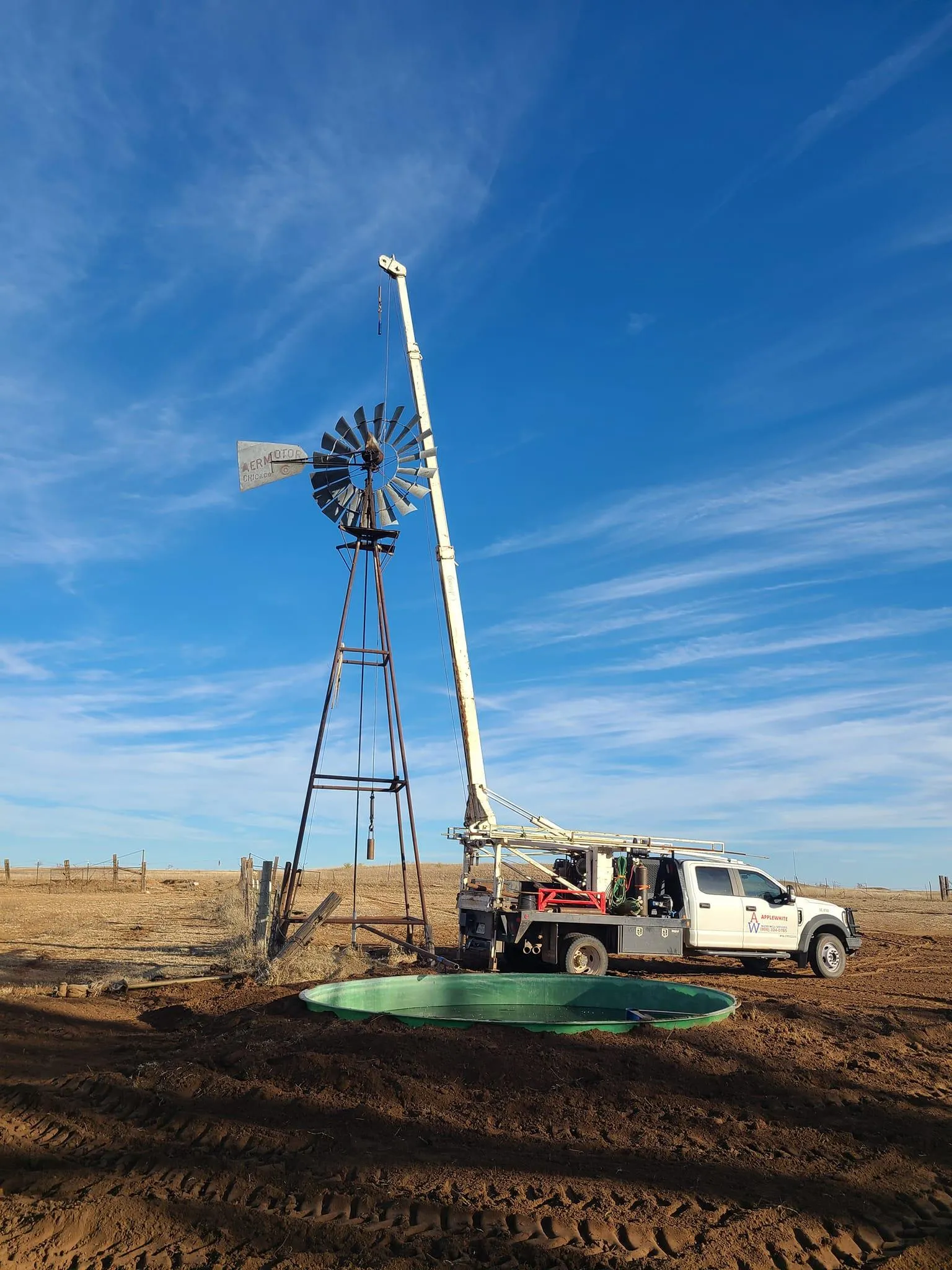
Look for windmill towers and pump bases, depressions near old homesteads, and pipe stubs in fence corners. State Well Reports for the property help too. We walk properties and find them as part of an assessment visit.
Well Plugging Across the Eastern Texas Panhandle
We serve every community below from our shop in Wheeler. Pick your town for local details, or call and tell us where the gate is.
- Well Plugging in Wheeler, TX
- Well Plugging in Pampa, TX
- Well Plugging in Shamrock, TX
- Well Plugging in Canadian, TX
- Well Plugging in Wellington, TX
- Well Plugging in Groom, TX
- Well Plugging in Miami, TX
- Well Plugging in Kelton, TX
- Well Plugging in Skellytown, TX
- Well Plugging in Alanreed, TX
- Well Plugging in Briscoe, TX
- Well Plugging in Allison, TX
Request a Free Well Plugging Estimate
Three quick things and someone from the shop will call you back — a real person reads every one of these. Rather just talk? 806-334-0785.