
Licensed · Insured · Local
Irrigation & Farm Well Service
An irrigation well is a production machine. When it falls off, yield falls with it. Applewhite Water Well services farm wells across the eastern Panhandle: test pumping, pump repair and replacement, and honest answers about what a tired well can still produce.
Matthew Applewhite holds the Master Water Well Pump Installer designation from TDLR. That designation covers single phase pumps, three phase pumps, and line-shaft turbine pumps. Your pivot well and your stock well get the same license on the same truck.
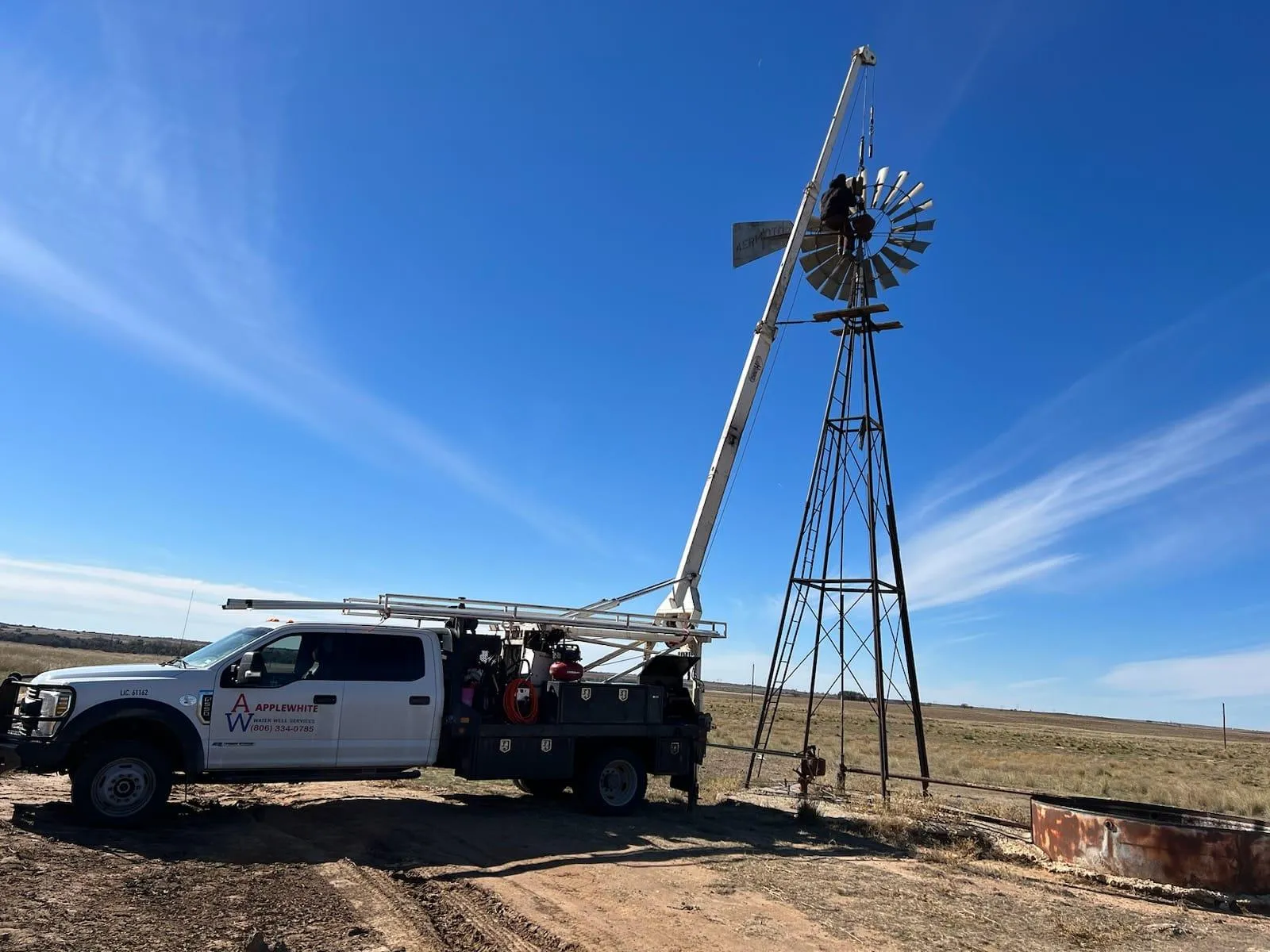
What You Get With Applewhite
Test pumping and well evaluation
We measure static water level, pumping level, and gallons per minute. Specific capacity tells you what the well can give before you spend money on it.
Submersible and turbine pumps
Repair and replacement of submersible turbines and line-shaft turbine pumps, including column pipe, bowl assemblies, and motors.
Three phase power work
Licensed for three phase pump installation. We size motors and controls to the load and check amp draw against nameplate before we leave.
Pre-season checks
A spring performance check on each well beats a mid-set failure in July. We test, report, and fix small problems while they are small.
How the Job Goes
-
Baseline the well
Static water level, total depth, and current output get measured and written down. No guesswork, no memory of what it pumped in 1998.
-
Test against demand
We compare well output to what your pivot, drip zone, or flood set actually needs. The gap, if any, defines the job.
-
Quote the fix
Pump adjustment, bowl replacement, motor work, or a deeper setting. You get each option priced in writing.
-
Do the work and verify
After the repair we re-test flow and pressure at the wellhead. The numbers prove the fix, not our word for it.
Why irrigation wells lose capacity
Three causes account for most lost capacity in this country. First, the regional water table has declined, so the pumping level now sits closer to the pump intake. The well breaks suction or pumps air on long sets.
Second, the well itself has plugged. Incrustation and fine sediment close off the screen or perforations over decades. Redevelopment by surging and bailing can restore some wells. Others have simply aged out.
Third, the pump has worn. Sand cuts impellers and bowls a little every season. A worn pump can lose a third of its rated output while the well itself is fine. Test pumping separates these causes, and the repair only makes sense after you know which one you have.
Line-shaft turbine or submersible?
Older Panhandle irrigation wells run line-shaft turbines: motor on the surface, shaft down the column, bowls at depth. They are serviceable and durable, and we keep them running.
When a turbine reaches the end of a rebuild cycle, a submersible turbine is often the modern answer. No shaft alignment, no surface gearhead, quieter, and better suited to variable frequency drives. The right answer depends on depth, gpm, and power at the site. We quote both when both make sense.
The economics of a marginal well
Some wells no longer justify full-rate irrigation but still carry real value. A well that has fallen to 80 gpm will not run a full pivot, but it will water stock, fill storage, or supply a half circle of drip. We tell you what the well can still do, priced against what it costs to keep it doing that.
When the honest answer is a new well, we say so, and we help you scope it with a licensed drilling contractor, with expectations set by nearby well logs and current water levels, not optimism.
Book pre-season service in late winter
Irrigation failures cluster at start-up and at peak load. Both are avoidable with a late-winter service visit: amp draw checked, packing and seals inspected, flow verified. By planting time the schedule fills with emergencies, and emergency timing is the most expensive timing there is.
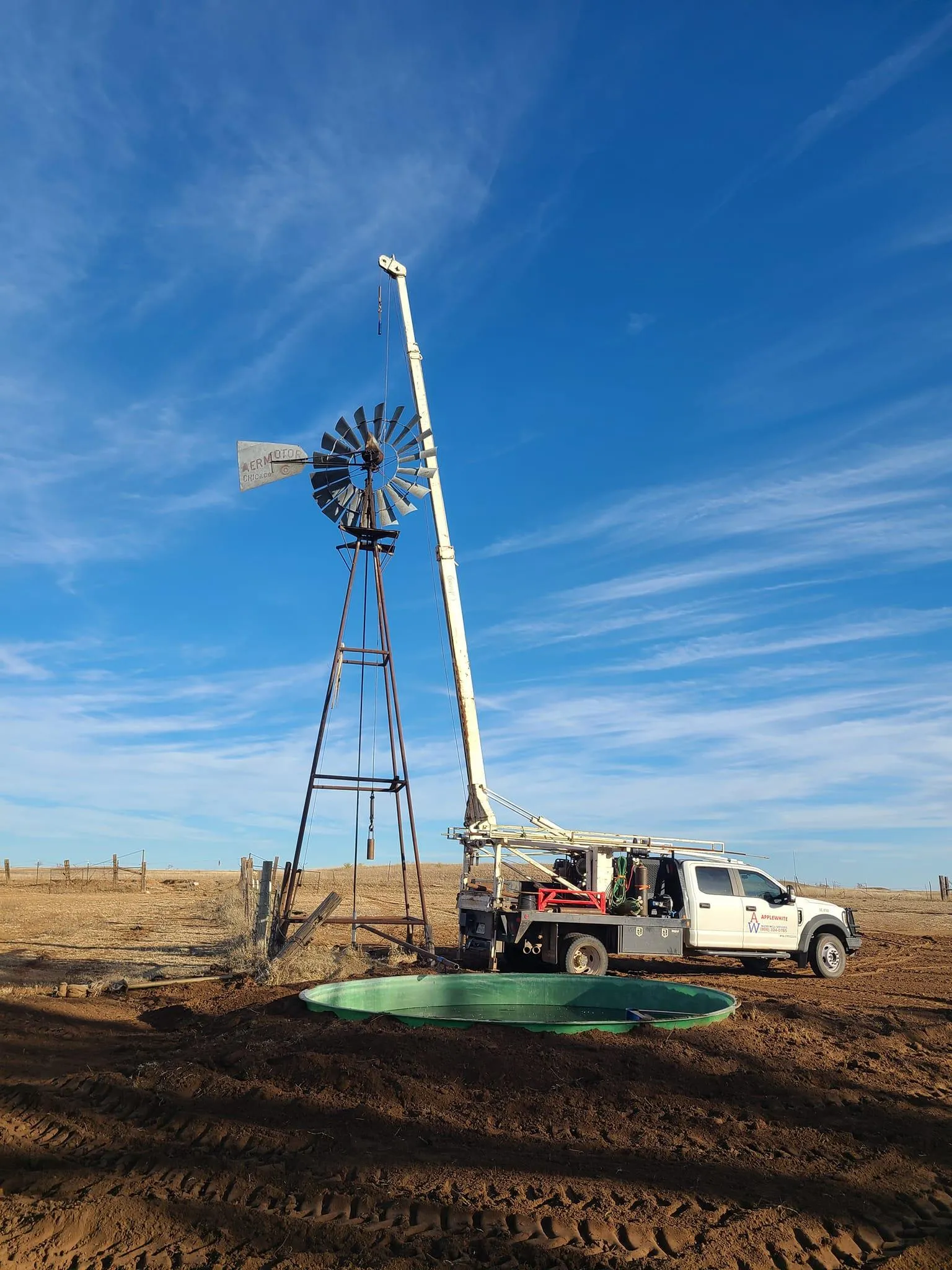
Who shows up
Matthew Applewhite, Owner & Operator
Applewhite Water Well is Matthew Applewhite's shop: a local crew that walks your property, quotes the job, and does the work. Licensed under an active Texas Master Water Well Pump Installer license (#61162, TDLR verified), insured, and based in Wheeler.
- One local crew from first call to finished job
- decades of hands-on well work in the eastern Texas Panhandle
- Serving ranches and rural homes across 12 Panhandle communities
- Written estimates before work begins, every time
Manufacturer & Industry Resources
- Franklin Electric — Submersible motors and drives for irrigation duty.
- Texas Water Development Board — Groundwater Data — State water-level and well data for planning irrigation capacity.
Irrigation Wells Questions, Answered
Do you service line-shaft turbine pumps?
Yes. The Master Pump Installer designation covers line-shaft turbines, and we service columns, shafts, bowls, and surface drives.
What is test pumping and why does it matter?
A controlled measurement of flow against drawdown. It yields specific capacity, which tells you whether weak output comes from the well or the pump before you pay to fix the wrong one.
Can you put a VFD on my irrigation well?
Often, yes. Variable frequency drives soften starts, reduce demand charges, and let one well serve loads of different sizes. We will tell you whether your motor and well suit one.
My well pumps sand into the pivot. What now?
Sand at the nozzles means sand through the bowls, and that is eating the pump. Causes range from a failing screen to an over-pumped well. We diagnose before it becomes a rebuild.
Can an old irrigation well be converted to stock or household use?
Frequently. A smaller pump set at the right depth turns a tired irrigation well into a strong stock well. It is one of the best-value conversions we do.
Do you handle the well reports and paperwork?
Yes. Licensed work comes with the state reporting done correctly, including plugging reports when an old well is retired.
How fast can you get an irrigation well back online mid-season?
Mid-set failures get emergency priority. Tell us the pump type and depth when you call and we bring the right pulling equipment the first trip.
Irrigation Wells Across the Eastern Texas Panhandle
We serve every community below from our shop in Wheeler. Pick your town for local details, or call and tell us where the gate is.
- Irrigation Wells in Wheeler, TX
- Irrigation Wells in Pampa, TX
- Irrigation Wells in Shamrock, TX
- Irrigation Wells in Canadian, TX
- Irrigation Wells in Wellington, TX
- Irrigation Wells in Groom, TX
- Irrigation Wells in Miami, TX
- Irrigation Wells in Kelton, TX
- Irrigation Wells in Skellytown, TX
- Irrigation Wells in Alanreed, TX
- Irrigation Wells in Briscoe, TX
- Irrigation Wells in Allison, TX
Request a Free Irrigation Wells Estimate
Three quick things and someone from the shop will call you back — a real person reads every one of these. Rather just talk? 806-334-0785.